Serving Ceres, CA and surrounding areas. (209) 638-0732
Cracks and potholes grow fast in Central Valley heat and winter rains. We find what is actually wrong, fix it properly, and keep your pavement solid for years.
Asphalt repair in Ceres covers cracks, potholes, sunken spots, and crumbling edges - we remove the damaged material, prepare the base underneath, and apply new asphalt so the surface is solid again, with most residential repairs finished in a single day.
Not every damaged driveway needs to be torn out and replaced. That is the conversation most homeowners in Ceres need before they start calling contractors. If the damage is isolated - a pothole here, some edge crumbling there, cracks that have not spread across the whole surface - repair is often the right answer at a fraction of full replacement cost.
The key is knowing what is happening below the surface. A repair that just fills what you can see without checking the base underneath will fail again within a season. For surface cracks before they become potholes, pairing repair work with asphalt crack sealing keeps the whole surface protected.
Hairline cracks that fan out into a connected network are a sign the pavement is breaking down from the surface down to the base. In Ceres, the combination of intense summer heat and clay soil movement speeds this process - what starts as a small crack can widen into serious damage within one or two seasons if left alone.
A section that feels soft underfoot or has broken into a hole means the base beneath the asphalt has been weakened, often by water getting in through surface cracks. The clay soils common around Ceres can create these low spots even without heavy vehicle traffic bearing down.
The edges of a driveway are usually the first place asphalt breaks apart, especially where there is no solid border to hold the pavement in place. Once the edges go, water gets underneath more easily and the damage spreads inward quickly through winter rains.
Fresh asphalt is dark and slightly flexible. When it turns light gray and crumbles at the surface, the binder has dried out from years of Central Valley sun and heat. At this stage, the pavement cracks easily under normal use - catching it before it reaches this point is much less expensive than waiting.
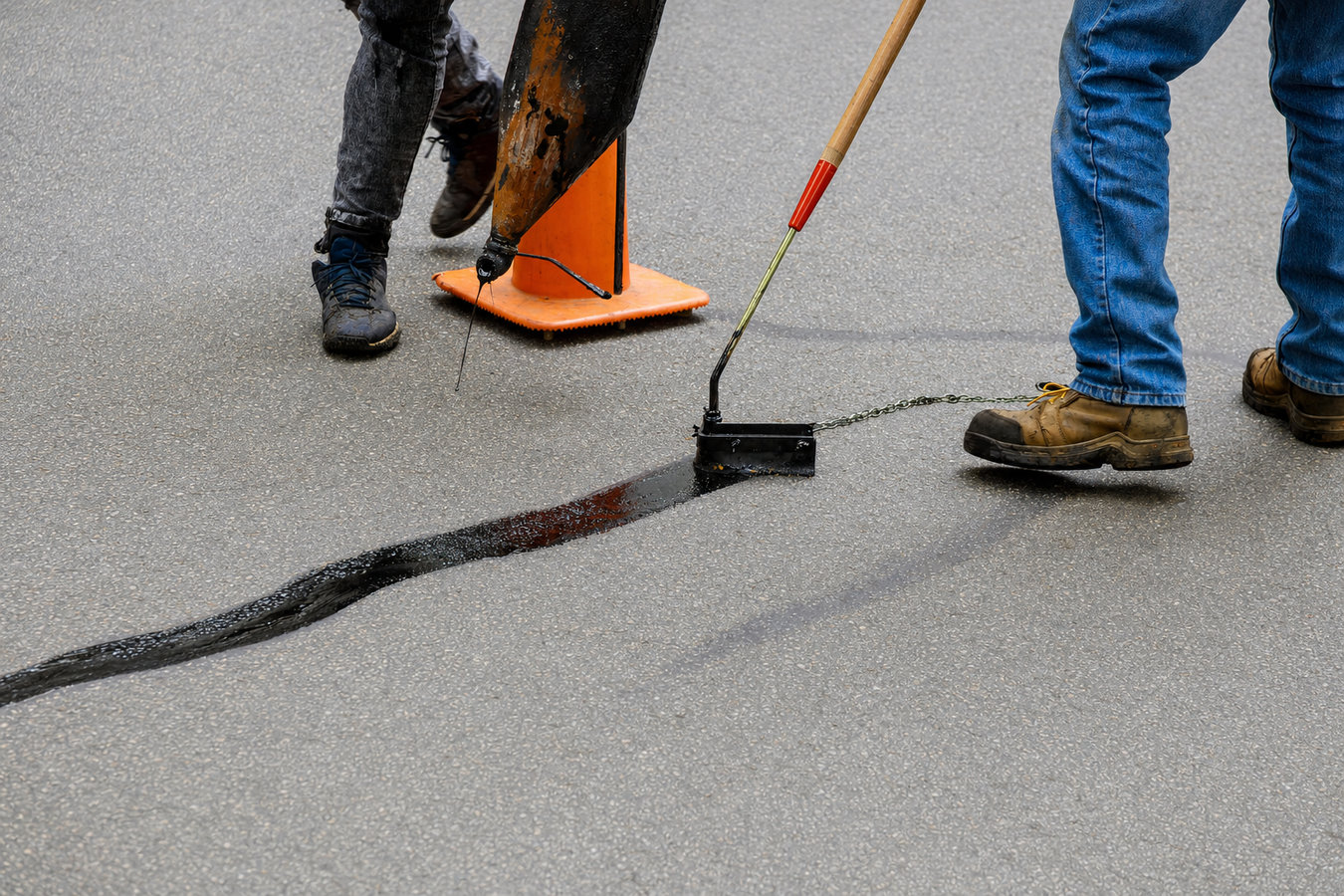
The right repair method depends on what is actually wrong, not on a one-size-fits-all approach. For surface cracks that are still narrow, we use flexible crack sealant that moves with the pavement instead of popping out in the next heat cycle. For potholes and sunken sections, we cut back to stable pavement edges, check the base, compact any soft spots, and apply hot-mix asphalt that is rolled flush with the surrounding surface. We also pair repair work with asphalt crack sealing on nearby problem areas in the same visit when it makes sense.
When the damage is widespread enough that patching is no longer cost-effective, we give you an honest recommendation to consider pothole repair as a targeted fix or discuss a full resurfacing option. Every assessment includes a look at the base condition - because a repair that skips that step is just delaying the same problem.
Best for surface cracks that are still narrow - prevents water from getting in and widening the damage before it becomes a bigger problem.
For holes and sunken sections where the base has given way - we cut to stable edges, prep the base, and fill with compacted hot-mix asphalt.
Suits driveways where the sides have started breaking away - restoring the edge stops water from undercutting the rest of the surface.
When a larger area has failed beyond what surface patching can fix - we remove and replace the whole section for a lasting result.
The Central Valley climate works on asphalt from two directions. Summer temperatures in Ceres regularly exceed 100 degrees, which dries out the asphalt binder and makes the surface brittle and prone to cracking under normal traffic. Then the winter rainy season - November through March - sends water into every crack and soft spot, weakening the base below before the next summer bakes the surface again. This cycle is why asphalt here tends to deteriorate faster than in cooler parts of California, and why repairs done without base work fail quickly.
The clay soils under most Ceres neighborhoods add another challenge. Clay expands when wet and shrinks when dry, pushing up from below and cracking pavement that is not sitting on a well-compacted base. Customers across the area - from neighborhoods in Riverbank to properties in Hughson - deal with the same soil movement issues. Getting repairs done before the rainy season protects your pavement through winter and gives you a head start on the next dry season.
Call or fill out our contact form and describe what you are seeing - cracks, potholes, soft spots, or general surface wear. We schedule a free on-site visit and reply within one business day.
We walk your driveway, check the base condition, and identify whether the problem is surface-level or deeper. You get a written estimate that explains the repair method and cost so there are no surprises.
The crew cleans out damaged areas, removes loose asphalt, prepares the base, and applies new material that is compacted flush with the surrounding surface. Most residential repairs in Ceres are done in a single day.
We tell you exactly when you can walk and drive on the repaired area - typically a few hours to 24 hours depending on the repair type and the day's temperature. We also advise on whether a sealcoat makes sense afterward.
We look at the base, not just the surface, and tell you whether repair or replacement makes more sense for your situation - no pressure.
(209) 638-0732We inspect the base condition before recommending a repair method, not after. In Ceres, where clay soil movement often damages pavement from below, skipping that step is the main reason repairs fail within a season. You get a fix that addresses the actual cause.
We tell you when repair makes sense and when it does not. If the damage is too widespread for patching to hold, we say so upfront and explain the options. Our goal is the right answer for your driveway, not the higher-priced job.
Working regularly in Ceres and the surrounding valley means we know which repair materials and methods hold up through triple-digit summers and wet winters. Local experience with industry-standard paving practices translates directly into repairs that last.
California requires a state contractor license for paving and repair work. You can look up our license at the CSLB before you agree to anything - that lookup takes two minutes and gives you real protection as a homeowner.
We combine base-level preparation with materials suited for the Central Valley climate. That combination is what separates repairs that hold through the next heat cycle from patches that open back up within months.
Seal surface cracks with flexible filler before water gets in and turns them into potholes - the preventive step that makes repairs last longer.
Learn MoreTargeted pothole repair for driveways and paved areas where a full-section fix is needed to restore a solid, flush surface.
Learn MoreRepairs made before the wet season protect your pavement through winter - reach out now and we will get you on the schedule.